

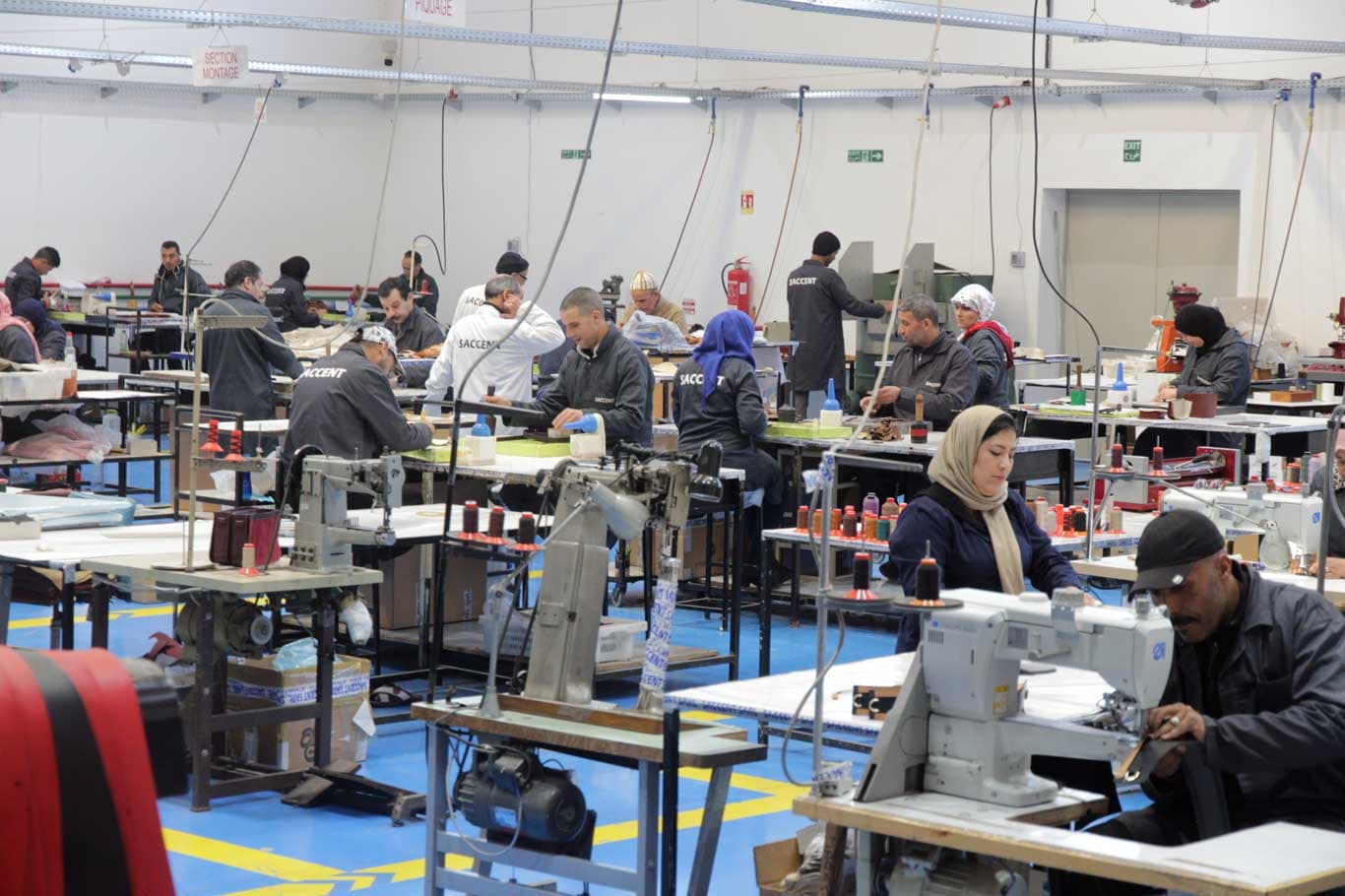
Finding a leather goods manufacturer is rarely the hard part. Any search engine will return hundreds. The hard part is telling the difference between a factory that can actually make your product, a trading agent who will subcontract it to someone you never meet, and a workshop that will accept the order and discover halfway through that it cannot hold your tolerances.
This guide covers how to run that search properly — what to decide before you start, where real manufacturers are found, and how to read the first reply you get.
Decide what you need before you start looking
Most sourcing projects go wrong at the beginning, not the end. A brief that says "we want a leather bag manufacturer" will attract every factory on the market and give you no basis to compare them.
Before contacting anyone, settle four things.
Product category. Structured handbags, soft unlined totes, small leather goods, belts and travel bags are different disciplines. They use different machines, different patterns and often different people. A factory excellent at wallets may be genuinely poor at structured bags. Ask about the category you need, not about leather goods generally.
Quality tier. "Luxury" means little on its own. Be concrete: stitch density, edge treatment, lining construction, hardware grade, whether panels are skived and folded or raw-edged. A factory's answers to these questions tell you more than any brochure.
Realistic volumes. Your first-order quantity and your twelve-month projection are different numbers, and manufacturers price against both. Being vague here invites a quote you cannot use. Our guide to minimum order quantities explains how MOQs are actually built.
Timeline. Work backwards from your launch or delivery date through production, sampling and material lead times. Sampling alone frequently takes longer than brands expect.

Where real manufacturers are actually found
Trade fairs remain the most efficient filter. A factory that exhibits at Lineapelle, Première Vision, MIPEL or Micam has committed real budget, brings physical samples you can handle, and can be asked hard questions face to face. An afternoon at a fair replaces weeks of email. Our events calendar tracks the main dates.
Referrals from adjacent suppliers. Tanneries, hardware suppliers, component makers and pattern-makers know exactly who produces well and who does not. They see the output. They are also unusually candid, because they have no stake in the manufacturing contract itself.
Industry bodies and export agencies. National export promotion agencies maintain vetted directories of manufacturers with verified registration, which filters out the pure intermediaries.
Sourcing platforms — with caution. Large B2B marketplaces are dominated by trading companies. They can be useful for building an initial long list, but treat every listing as unverified until you have confirmed the factory exists at the address given.
The five filters that matter
Once you have a long list, narrow it against five criteria. These predict success far better than price.
Capability. Can they make your specific construction? Ask for photographs of comparable work, not their best-ever sample. Ask which operations happen in-house and which are subcontracted — cutting, skiving, edge painting, stitching, finishing, hardware fitting.
Capacity. Capacity is only meaningful relative to your order and their existing commitments. A factory running at full occupancy for a large client will treat your order as filler. Ask what proportion of their capacity your order would represent.
Compliance. Which chemical, social and environmental standards can they document? Ask for the actual certificates with validity dates, and note carefully whether a certification belongs to the factory or to one of its leather suppliers. These are not the same claim.
Communication. How fast, how precise and how honest is the first exchange? A manufacturer who asks clarifying questions about your tech pack is showing you competence. One who quotes immediately without questions is showing you the opposite.
Commercial terms. Payment structure, sampling costs, tooling charges, Incoterms and who carries the cost of a failed sample round. Get this in writing early.

What to send in a first enquiry
A vague enquiry gets a vague quote. Manufacturers triage their inbox, and a complete brief moves you to the top of it. Include:
- Product type, with reference images or sketches
- Target quantities — first order and annual projection
- Leather type, weight and finish, if known
- Lining, hardware and any branding requirements
- Target landed cost or retail price point
- Required delivery date
- Destination market and any compliance requirements
If you have a tech pack, send it. If you do not, say so plainly and ask whether they offer development support — many do. Our tech pack guide covers what a production-ready specification contains.
How to read the first reply
The first response tells you a great deal.
A serious manufacturer will typically ask questions before quoting, flag anything in your specification that is impractical or unusually expensive, be specific about what they can and cannot do, and give a sampling timeline separate from the production timeline.
Be wary of the opposite pattern: an immediate quote with no questions, a price dramatically below every other response, unwillingness to discuss which operations are subcontracted, or reluctance to be visited.
Verify before you commit
Before placing a first order, confirm the factory exists as described. A video call walking the production floor costs nothing and reveals a great deal. A physical visit reveals more. Where a visit is impractical, third-party audit firms will inspect against a defined checklist.
Then sample. A sample is the only reliable evidence of capability — it tests pattern-making, cutting, stitching and finishing simultaneously, and it tests how a factory responds to correction. How a manufacturer handles the second sample round, after you have sent detailed comments, is the single most useful signal you will get before committing to production.
Red flags worth taking seriously
- No physical address, or an address that does not match the company registration
- Refusal to discuss subcontracting
- A price far below the market with no explanation of why
- Certificates that belong to suppliers, presented as the factory's own
- Pressure to skip sampling to "save time"
- Communication that degrades as soon as you ask detailed questions
Where to go from here
The manufacturers worth working with tend to behave the same way early: they ask questions, they are specific about limits, and they are willing to be checked. Those signals are visible in the first week of contact, long before you commit to an order.
If you are preparing a project and want a direct answer on feasibility, quantities and timing, send us the brief and we will tell you plainly whether it is something we should make.