

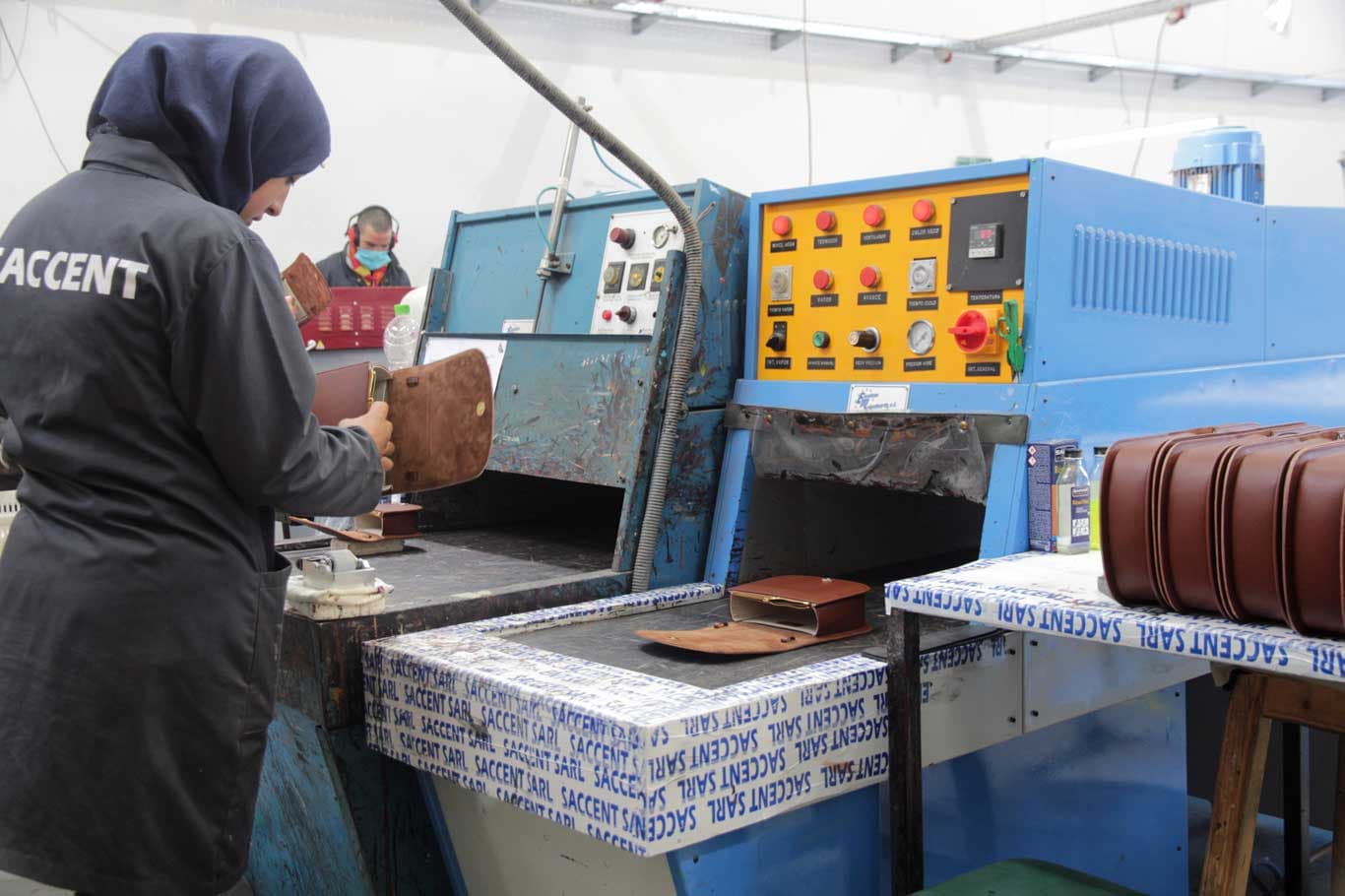
Brands often talk about "the sample" as though it were a single object. In production it is a sequence, and each stage in that sequence exists to answer a different question. Treating them as interchangeable is how projects end up approving something that was never meant to represent the final product.
This article sets out what each stage proves, what to check, and how to write feedback a factory can actually use.
Why there is more than one sample
Each sample answers one question, and answering them in the wrong order wastes money.
- Prototype: does this construction work at all?
- Salesman sample: is this good enough to sell from?
- Pre-production sample: is this exactly what production will be checked against?
Trying to answer all three at once — a common instinct when the calendar is tight — usually means the first sample is made in final materials, then scrapped when the construction changes. Final leather and custom hardware are the expensive parts. You do not want to buy them twice.
Stage 1: the prototype
Question it answers: does the construction work, and are the proportions right?
The prototype is typically made in whatever leather is available, often in the wrong colour, sometimes with substitute hardware. That is deliberate. Its job is to test pattern, volume, structure and function, not appearance.
What to check:
- Overall proportions against the sketch, in the hand rather than on screen
- Does it hold its intended shape when empty, and when loaded?
- Opening, closing and access — is it usable?
- Strap length and drop
- Interior layout and whether the compartments work in practice
- Whether the construction is physically sound at the stress points
What not to comment on: colour, leather feel, hardware finish, edge finish quality. None of those are being tested yet, and commenting on them generates noise that obscures the real feedback.

Stage 2: the salesman sample
Question it answers: is this good enough to show buyers and take orders from?
Salesman samples are made in the intended materials, or close to them, and are used for showroom and sales purposes. Several may be made, sometimes in multiple colourways.
What to check:
- Correct leather, colour and finish
- Hardware type and plating
- Lining material and colour
- Branding placement and legibility
- Edge finish quality and consistency
- Overall presentation
The important discipline here is that a salesman sample sets a commercial expectation. Buyers order against it, and consumers eventually receive against it. Anything approved at this stage is difficult to walk back later.
Stage 3: the pre-production sample
Question it answers: is this exactly what production will be measured against?
The pre-production sample is made with final materials, final hardware, final construction and the actual production method — ideally on the same line and by the same operations that will run the order. It is the reference for quality control.
What to check, in detail:
- Every material against the approved specification
- Every dimension against the tech pack, with tolerances
- Stitch density and consistency
- Edge treatment — coats, colour, smoothness
- Hardware function, cycled repeatedly rather than once
- Branding position measured, not eyeballed
- Interior construction and finishing
- Weight
Approving a pre-production sample means agreeing that units matching it are acceptable. Anything you dislike but approve becomes the standard.

How to write feedback a factory can use
This is where most time is lost. Vague comments produce vague corrections and an extra round.
Be specific and measurable. "Strap is too long" is weak. "Reduce strap drop from 55cm to 50cm" is actionable.
Say where. Reference the panel, the seam, the position. Photographs with annotations beat paragraphs.
Separate must-fix from preference. A factory that cannot tell which comments are mandatory will guess, and may spend a round on a preference while missing a defect.
Keep one document. Comments spread across emails, messages and calls get lost. One numbered list per sample round, with each point resolved and marked, prevents the same issue recurring.
Answer quickly. Sample rounds are usually delayed by review time, not making time.
How many rounds to expect
Two rounds is good. Three is normal. More than three usually means the specification was not settled before sampling started — a problem solved upstream, in the tech pack, not in more samples.
Budget for at least two in your calendar. Assuming one is the most common planning error we see, and it is the one that most often costs a launch date.
Practical points on cost and materials
Sampling is usually charged, and often credited against production when the order proceeds. Ask which applies before you start.
Order long-lead materials early. Custom hardware in particular frequently takes longer than the bag itself, and a pre-production sample cannot be completed without it. Deciding hardware late is one of the reliable ways to lose weeks — see our guide to lead times.
Where to go from here
The discipline that matters most is matching the question to the stage: test construction before you buy final materials, and treat pre-production approval as the commitment it is.
Our prototyping and sampling overview covers the development process more broadly. If you have a design ready to prototype, send it over.