

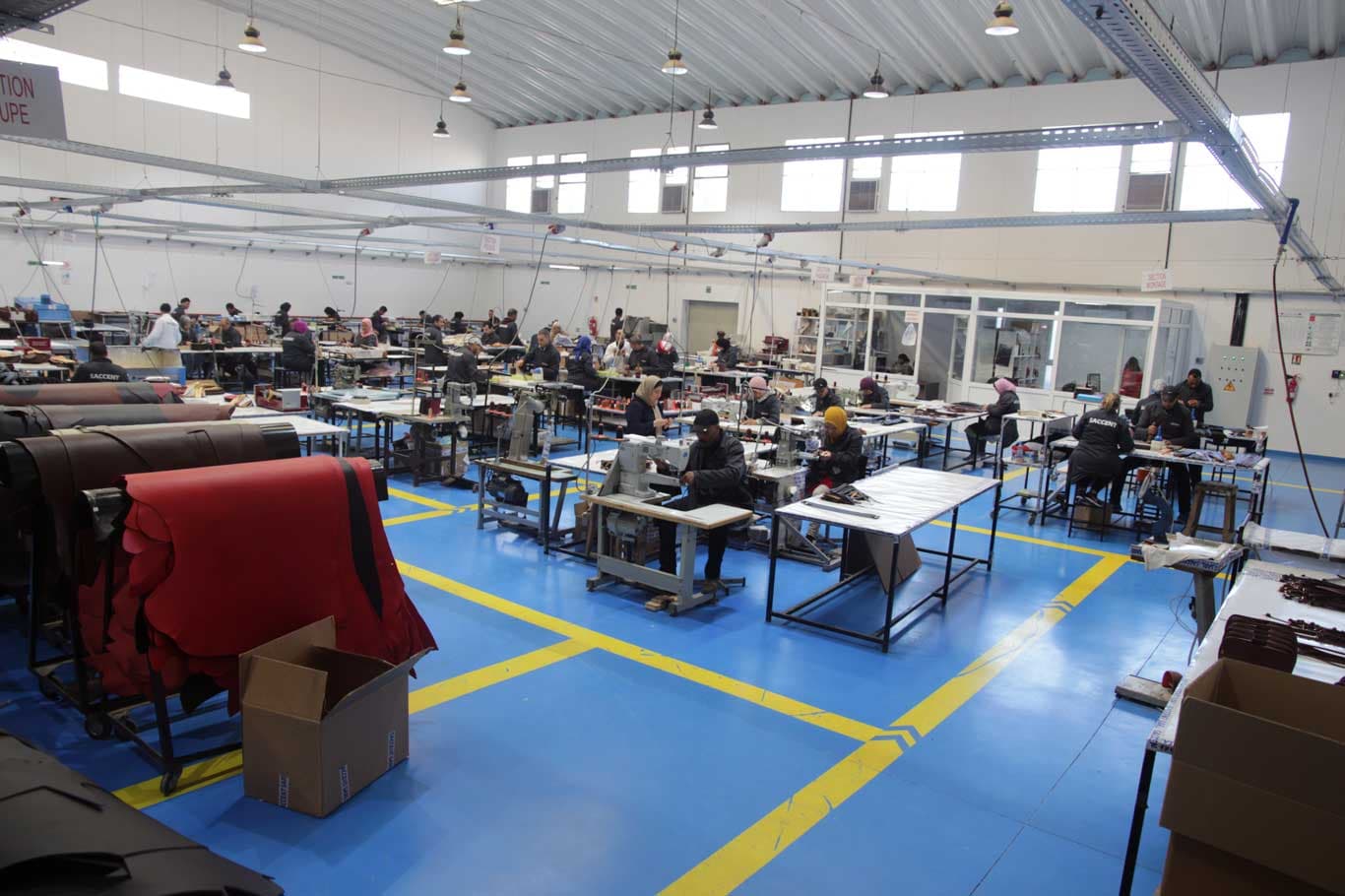
Before committing a season's production to a factory, you need to know it can actually do the work. A factory audit answers that question — and a surprising amount of it can be done remotely, before anyone books a flight.
This checklist covers what to look at, what to ask, and how to interpret the answers.
Before you visit
Verify the basics first. A short desk check filters out a meaningful proportion of candidates.
- Company registration — does the legal entity exist, at the address given?
- How long has it operated under this name?
- Does the website address match the registration address?
- Are the client references checkable?
- Do the certificates provided belong to the factory, or to its suppliers?
That last point deserves emphasis. It is common to be shown a tannery's environmental certification in a way that implies the manufacturer holds it. These are different claims. Ask directly: is this certificate issued to you, or to a supplier?
Capability
The core question is what happens inside this building and what leaves it.
Ask which operations are in-house. Cutting, skiving, edge preparation and painting, stitching, assembly, finishing, hardware fitting, quality control, packing. For each, in-house or subcontracted?
Subcontracting is not automatically a problem — most factories subcontract something. Concealing it is the problem, because it means part of your quality chain is invisible to you.
Look at the machinery. You do not need to be an engineer. Note whether cutting is manual, die-based or CNC; whether there are dedicated skiving and edge-painting stations; the variety of sewing machines, since flatbed, post-bed and cylinder-arm machines each do different work.

Ask what they decline to make. A factory that claims it can make anything is either very large or not being straight with you. A clear answer about what they do not do is a strong positive signal.
Capacity
Capacity claims are the least reliable numbers in any audit, because they are usually theoretical.
Ask instead:
- What is current capacity utilisation?
- What proportion of it does your largest client represent?
- What would our order represent as a share of monthly output?
- What is the current lead time for a new order, today?
- How does capacity change across the year?
An order that represents a very small share of output risks being deprioritised. An order that represents a very large share creates concentration risk on both sides. Somewhere in the middle is usually healthiest.
Quality control
This is where audits earn their value. Ask to see the actual process, not a description of it.
Incoming materials. Are hides inspected and graded on arrival? Is there a light table for defect marking? Are hardware and components checked against specification before use?

In-line. Who checks work between operations, and what happens when a defect is found mid-run? Is there a documented stop rule, or does the line simply continue?
Final. What proportion of finished units is inspected — a sample or all of them? Against what standard? Who signs off?
Records. Ask to see defect data from a recent production run. A factory that measures its own defect rate is managing quality. A factory that cannot produce the number is not, whatever it says.
Testing. Which physical tests are performed — abrasion, colour fastness, hardware pull, zip cycling? In-house or by a laboratory?
Compliance and social standards
Ask for documents, with validity dates, and check who they are issued to.
- Chemical compliance relevant to your market, and supplier declarations for materials
- Any social or labour audits, and who conducted them
- Environmental permits
- Traceability — how far back can materials be traced?
Then look. Are fire exits clear and marked? Is protective equipment available and actually used? Is the workspace lit and ventilated? Are chemicals stored properly? These observations tell you more about how a factory is run than any certificate.
Sampling and development
- Is there an in-house pattern-making capability, or is it outsourced?
- Can they develop from a sketch, or do they require a complete tech pack?
- What is the realistic time from approved specification to first sample?
- How many sample rounds are typically needed?
- Is sampling charged, and is it credited against production?
A factory with in-house pattern-making iterates faster and understands your product better. It is one of the more reliable predictors of a smooth development process.
Communication and management
Softer, but strongly predictive.
- Who will be your day-to-day contact, and in which language?
- What is the escalation path when something goes wrong?
- How are specification changes documented and confirmed?
- What happens, contractually and practically, if a shipment is late or defective?
Ask about a project that went wrong and how it was resolved. A factory that answers openly is one you can work with. A factory that claims nothing has ever gone wrong is not being honest with you.
Doing this remotely
If a visit is impractical, much of this can be covered by a live video walkthrough — unscripted, following your directions rather than a prepared route. Ask to see specific stations: the cutting room, the edge-painting area, final inspection, the material store.
Supplement with a third-party audit firm inspecting against a defined checklist, and with a sample order, which tests capability more honestly than any inspection.
The signals that matter most
In our experience the strongest predictors are willingness to be checked, specificity about limits, measured defect data, and clarity about subcontracting. Those four tell you most of what an audit can tell you.
If you want to run this checklist against us — remotely or in Fes — get in touch and we will make the arrangements. Our process overview covers how development and production actually run here.