

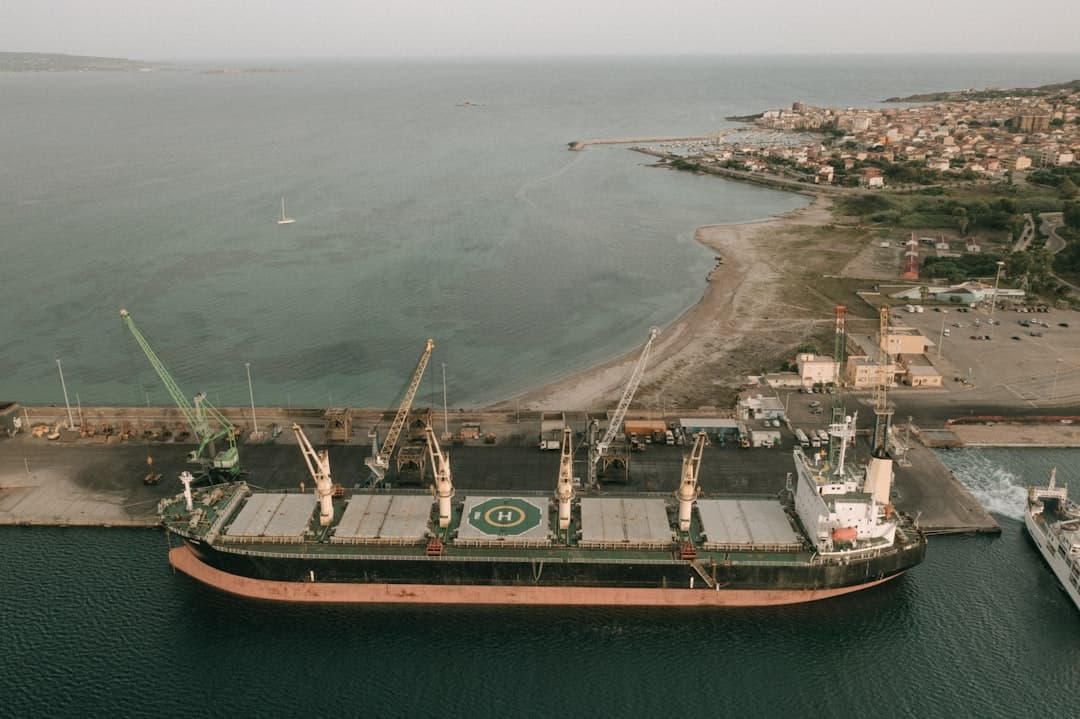
Morocco's proximity to Europe is one of the main reasons brands manufacture there. Turning that geographic advantage into an actual commercial one depends on getting the customs treatment right — which is mostly a documentation exercise.
This guide covers how the trade relationship works, what preferential treatment requires, and where shipments are actually delayed.
Trade rules change and vary by product classification. Confirm current requirements with a customs broker or the relevant authority before relying on any of this for a specific shipment.
The trade relationship
Morocco and the European Union have a long-standing Association Agreement establishing a free trade area for industrial goods. For leather goods manufactured in Morocco and meeting the origin rules, this means preferential tariff treatment on import into the EU — in most cases, zero duty.
That is the headline benefit. It is conditional, and the condition is origin.
Rules of origin: the part that matters
Preferential treatment applies to goods that originate in Morocco. Being assembled there is not automatically sufficient.
Goods generally qualify in one of two ways. They are wholly obtained in Morocco, which rarely applies to leather goods, since hides and hardware are frequently imported. Or they have undergone sufficient working or processing — the route that applies in practice.
For leather goods, sufficient processing typically means manufacture from materials classified under a different tariff heading than the finished product. Cutting, stitching and assembling finished articles from leather in the piece is normally substantial enough. There are also value-based criteria in some cases, limiting the proportion of non-originating materials.
Two practical consequences:
Where your leather comes from matters. Leather imported from outside the preferential area can still be used, but the transformation must be substantial enough to confer origin. Confirm this for your specific product classification rather than assuming.
Cumulation may help. Provisions allow materials from certain partner countries to count as originating in some circumstances. Whether this applies depends on the materials and the current rules, and is worth checking with a broker if your bill of materials is heavily imported.
Getting origin wrong is expensive. Duty is reassessed retrospectively, with interest and potentially penalties, and the liability usually sits with the importer.
Proving origin
Preferential treatment must be claimed with valid proof of origin. Historically this was the EUR.1 movement certificate, issued by Moroccan customs on application by the exporter. Systems have been modernising toward registered-exporter statements made on the invoice.
Which mechanism applies depends on current arrangements and the value of the consignment. Confirm with your exporter and broker which document your shipment needs before it moves, because a shipment arriving without valid proof either pays full duty or sits while the paperwork is corrected.
Keep supporting records. Origin claims can be verified after the fact, sometimes years later. The exporter must be able to evidence how origin was determined — supplier declarations for materials, production records, bills of materials. This is a real record-keeping obligation, not a formality.
Documents for a typical shipment
- Commercial invoice, with accurate description, value and Incoterm
- Packing list, with carton count, weights and dimensions
- Proof of origin
- Transport document — CMR for road, bill of lading for sea, air waybill for air
- Export declaration on the Moroccan side
- Import declaration on the EU side
- Certificates specific to the goods, such as CITES documentation for exotic leathers
Accuracy matters more than completeness. Most delays we see come from inconsistency — a value on the invoice that does not match the declaration, a carton count that does not match the packing list, a description too vague to classify.
Classification
Leather goods fall under Chapter 42 of the Harmonised System, which covers articles of leather, handbags, wallets and similar. Precise classification depends on the article and its material composition.
Classification determines duty rate, the applicable origin rule and any restrictions. Get it right at the start: reclassification mid-shipment causes delay, and a pattern of misclassification attracts scrutiny on future consignments.
Routes and transit times
Road and short-sea ferry through the Strait of Gibraltar into Spain, then onward by road, is the standard route for European destinations and the fastest for most of Western Europe.
Container sea freight from Moroccan ports serves larger volumes and more distant destinations at lower cost per unit.
Air freight is available for urgent or high-value consignments.
The practical advantage over long-haul sourcing is that transit is measured in days rather than weeks, which is what makes in-season reordering viable — the core of the nearshoring argument.
Incoterms
Agree the Incoterm before quoting, not after. It determines who arranges and pays for transport, who bears risk at each stage, and who is the importer of record.
Common arrangements are EXW, where the buyer takes responsibility from the factory door; FCA or FOB, where the seller handles export clearance; and DAP or DDP, where the seller delivers to destination, with DDP also making the seller responsible for import duty and clearance.
DDP is convenient for the buyer but requires the seller to be able to act as importer in the destination country, which is not always practical. Our Incoterms guide covers the trade-offs.
VAT and import charges
Preferential origin removes customs duty. It does not remove import VAT, which is charged at the destination country's rate and is generally recoverable by VAT-registered businesses through normal returns.
Budget for VAT as a cash-flow item even where it is ultimately recoverable, and expect broker and handling fees separately.
Where delays actually come from
- Missing or invalid proof of origin
- Invoice values inconsistent with the customs declaration
- Vague goods descriptions that cannot be classified
- Packing lists that do not match the physical shipment
- Missing CITES documentation for exotic materials
- Incoterm confusion over who clears the goods
Every one of these is a documentation problem, and every one is preventable before the shipment leaves.
Practical advice
- Confirm classification and origin treatment before the first shipment, not during it
- Use a broker familiar with Morocco–EU trade
- Keep origin evidence for the full retention period required
- Reconcile invoice, packing list and declaration before dispatch
- Agree the Incoterm at quotation stage
Our guide to Morocco's trade advantage covers the wider commercial picture. If you are planning a first shipment and want to understand how it would work in practice, get in touch.